Love Hotels Part I: Rest Or Stay?
There is a list of "Things To Do" when travelling in Japan: visit a few temples, go to a sento (public bath) or onsen (hot springs), eat at a real sushi restaurant, try pachinko (a kind of vertical pinball), get lost in a "tech town" district like Akihabara in Tokyo or Den-Den Town in Osaka...
...And of course, spend a night in a "Love Hotel".
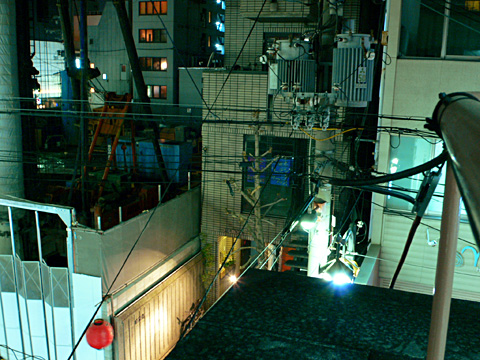
Love hotels are inexpensive but high-quality hotels where rooms can be booked by the hour ("rest") or for the night ("stay"). They are primarily aimed at the young couple in quest of intimacy, and emphasize discretion so as not to embarass their customers. Thus, they are generally located off the main streets, and their entrances and exits are slightly concealed. The only thing you see of the staff is their hands when they take your money. In the parking lots, screens raise to hide the cars number plates. All is made to minimize the risk of meeting an acquaintance by chance... Although, of course, it sometimes happens! There are many stories of people bumping into their regular partner in the hall of a love hotel. I guess it must be funny.
The really surprising thing about love hotels, though, is their sheer number. They can be found everywhere. It is quite interesting, considering that the Japanese are not known for frequent intercourse. According to my friends, the success of love hotels is due to 3 kinds of people:
-Young couples: in Japan, most people live with their parents up until marriage, and it is unthinkable to invite your loved one for a week-end at the family home; so the hotel is the only place to go until marriage. And even if one of the partners has his/her own place, Japanese people are very shy about inviting people to their homes (even people they feel intimate enough with to have sex together), so many starting couples prefer to meet on "neutral ground".
-Older couples: Japanese apartments are famously cramped and poorly soundproofed. So couples with kids or living with elderly parents (a common occurence throughout Asia) rarely feel relaxed enough to make love at home. So they go to a place where they can concentrate on having fun: the love hotel next door, for example.
And then there are the "other couples", or as Lisa Katayama put it in Wired "politician and secretary, teacher and student, husband and hooker"... In Japan, married couples are notoriously uninterested in conjugal sex ("sexless couples" are one of the most common themes in the Japanese media), but it doesn't mean they have no libido... And quite often that libido goes into extra-marital affairs. Anyway, these "other couples" can certainly use the privacy of a love hotel!
To be continued in: Love Hotels Part II, a room for every fantasy!
Labels: couple, fantasy, hotel, japan, love, osaka, privacy, room, tokyo, wire
posted by PODJAPAN @ 6:52 PM
0 comments